By Ekunkonye Junior in Abuja
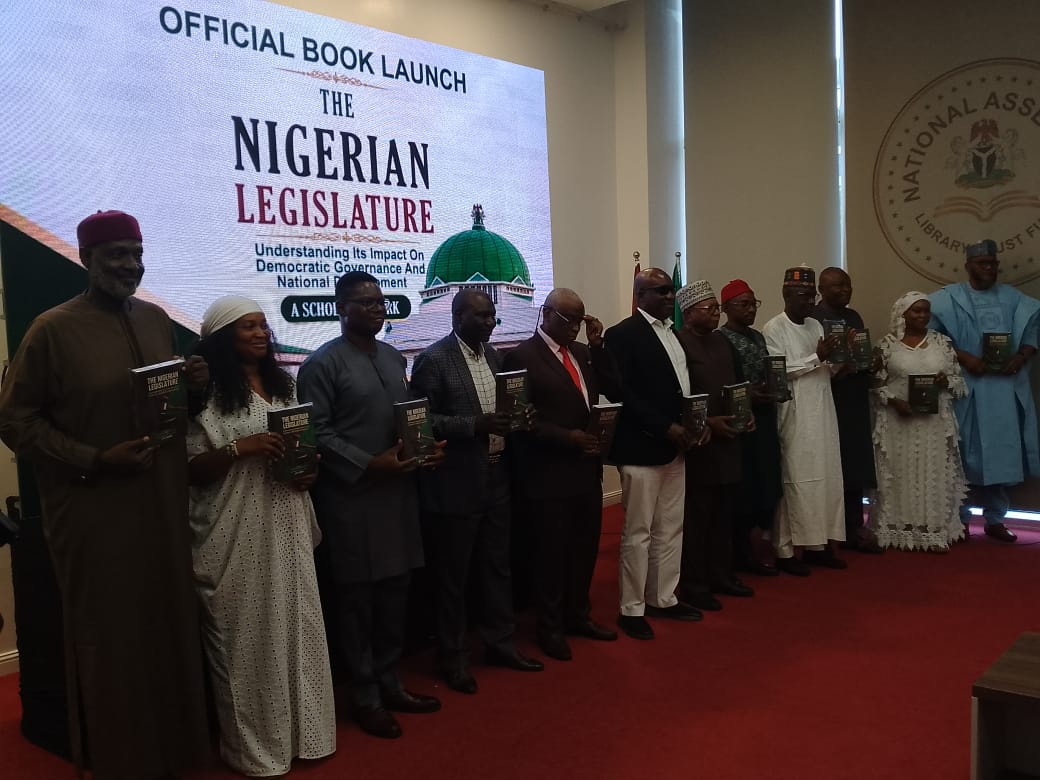
For years, the National Assembly has been one of Nigeria’s most talked-about yet least understood institutions. On Monday in Abuja, Dr. Ezrel Tabiowo launched “The Nigerian Legislature: Understanding Its Impact on Democratic Governance and National Development” a book that attempts to close that gap.
Reviewers and discussants described it as timely, scholarly and necessary, coming at a time when public distrust of parliament is high and demands for accountability are louder than ever.
A Scholarly First
The book is being hailed as a landmark because few comprehensive, evidence-based texts exist on how Nigeria’s legislature actually works. Tabiowo combines constitutional analysis, historical review, and personal experience as a parliamentary correspondent and media aide.
Author’s Credentials Matter
Having covered the National Assembly since 2010 and served as Media Adviser to the 9th Senate President, Tabiowo writes from the inside. That “ringside seat” gives the book authenticity that purely academic works often lack.
Tracing Parliamentary Evolution
The book traces legislative institutions from pre-colonial governance traditions through colonial rule, the Westminster system of the First Republic, military eras, and the current presidential model. This historical lens explains why today’s National Assembly behaves the way it does.
Constitutional Duties under Scrutiny
Ambassador Ita Enang, the reviewer, highlighted chapters on budget processes, borrowing approvals, and oversight. These are core constitutional functions that often get lost in headlines about allowances and drama.
Leadership Across Assemblies
By chronicling the tenures of former Senate Presidents Enwerem, Okadigbo, Anyim, and Speakers from Buhari to Bankole, the book shows continuity and change across the Fourth to Sixth Assemblies. It reminds readers that institutions outlive individuals.
Confirmations Are Not Ceremonial
A key argument is that screening of ministers, ambassadors and heads of agencies is a constitutional duty requiring independent judgment. The book challenges the notion that Senate confirmations are mere formalities.
Oversight and Accountability
Dedicated chapters assess oversight powers, institutional weaknesses, and case studies of major investigations. This is where the book moves from description to evaluation, asking whether oversight is producing results.
Economic Governance Focus
The book dives into appropriations, constituency projects, fiscal federalism, and legislative input on education and infrastructure. It frames the National Assembly not just as a law-making body but as an economic actor.
Media-Legislature Relationship
Tabiowo explores how media coverage shapes public perception. Negative stories dominate, while the painstaking work of committees rarely makes news. The book seeks to provide context for decisions that drew public criticism.
Acknowledging Mentorship
The tribute to former Senate President Ahmad Lawan underscores the importance of mentorship in legislative professionalism. Lawan’s 27 years in the Assembly are presented as a model of consistency.
Institutional Support
The author also acknowledges the National Assembly and NILDS for providing the environment to document legislative developments. This signals that reform must be institution-led, not just personality-driven.
Challenges Laid Bare
The book does not shy away from problems: capacity gaps, high turnover of members, ethical issues, frosty executive-legislative relations, and judicial interventions. Naming them is the first step to fixing them.
Technology and Globalisation
A modern section assesses how digital technology and social media are changing legislative practice and public engagement. Citizens now demand real-time accountability, and parliament must adapt.
NILDS Endorsement
Prof. Abubakar Sulaiman’s recommendation that the book be used by NILDS students shows its potential as a textbook. Training the next generation of legislative staff with this material could improve institutional memory.
CNA’s Take on Public Perception
The Clerk to the National Assembly, Barr. Kamorudeen Ogunlana, said the book will help correct misconceptions. That is crucial because public misunderstanding often breeds distrust, which weakens democracy.
Balance Over Praise-Singing
Reviewers stressed that the book is not propaganda. It documents achievements and failures with equal rigor, making it credible for both supporters and critics of the legislature.
Reform Proposals
Beyond diagnosis, the book proposes reforms to strengthen institutions, enhance accountability and improve effectiveness. In a democracy, suggestions matter as much as critique.
Why It Matters Now
With 2027 elections approaching and debates on constitutional review ongoing, a book that explains how parliament works helps citizens make informed choices and demands.
A Resource for Multiple Audiences
Lawmakers, aides, journalists, CSOs, students and ordinary citizens all have something to gain. The book translates complex procedures into understandable language without dumbing them down.
Bottom Line
The Nigerian Legislature_ does not claim to transform the National Assembly overnight. But by documenting history, explaining procedures, and proposing reforms, it gives Nigeria a reference point. If read widely, it could be the start of a more informed conversation about the arm of government closest to the people.