


By Michael Itodo
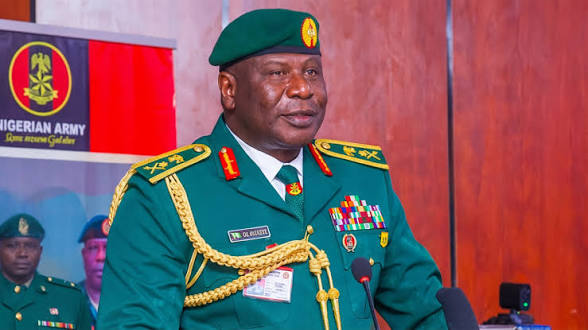
Friday, 30 October 2026, marked one year since General Olufemi Olatubosun Oluyede assumed office as Nigeria’s 19th Chief of Defence Staff (CDS). His appointment came at a difficult time when insecurity had become a constant threat to communities, disrupting economic activities and testing the capacity of the Nigerian military to protect the lives and property of the Nigerian people.
Twelve months have already passed, and General Oluyede’s record in office has given a clear indication of the direction in which he has taken the Nigerian military, the priorities of the Armed Forces under his leadership, and the progress made so far.
One of the defining features of Oluyede’s tenure has been his strong emphasis on inter-service cooperation among the Nigerian Army, Navy and Air Force.
By fostering a more united security apparatus, the CDS has made the Armed Forces more responsive and effective in confronting the country’s security challenges. This approach has proven particularly valuable because military success depends not only on the strength and numbers of troops deployed, but equally on how well the different services work together as a coherent whole.
The results of this joint approach are visible in the sustained offensive against insurgent groups across several parts of the country. Under operations such as Hadin Kai and Fansan Yamma in the North-East and North-West, military formations have continued to confront Boko Haram, the Islamic State West Africa Province (ISWAP) and various armed criminal networks.
These campaigns have focused on clearing insurgent hideouts, disrupting their logistics chains, and targeting their commanders as well as their operational assets. The neutralisation of fighters and the destruction of key facilities demonstrate the sustained pressure and improved coordination that the Armed Forces under Oluyede’s leadership have brought to bear on these groups.
While the overall security situation remains demanding, maintaining this pressure is essential to weaken the capacity of armed groups to recruit, regroup and launch further attacks. Oluyede has also paid close attention to emerging security threats through coordinated operations in other parts of the country.
Initiatives such as Operation Savannah Shield in Kwara State reflect the Armed Forces’ recognition that many criminal activities now cut across geographical boundaries and require more than a purely conventional military response. Equally significant have been the rescue of kidnapped civilians, the disruption of criminal networks, and sustained efforts to dismantle illegal oil bunkering and refining facilities in the Niger Delta and other parts of the southern region.
These activities affect not only national security but also the livelihoods of ordinary citizens and the revenue available to the nation. Their continued disruption has rightly remained a priority for the Armed Forces.
Another important area of focus has been the deliberate introduction and expansion of technology in modern military operations across the country.
The CDS has demonstrated a clear understanding that the nature of warfare has changed considerably, and that the ability to obtain reliable intelligence, monitor difficult terrains and respond rapidly to emerging threats can make the difference between success and failure.
In this regard, greater use has been made of the Defence Space Administration, including military satellite assets such as DELSAT-1, and improved geospatial intelligence. These capabilities have assisted commanding officers in better understanding the operational environment, planning the effective movement of troops, and identifying threats before they escalate into major security incidents.
For communities affected by insurgency and other forms of violence, residents need the assurance that those deployed to defend them will respect their rights and dignity. Under Oluyede’s watch, the Armed Forces have maintained a people-centred operational approach that forms an important part of the CDS’s leadership agenda.
Observance of domestic laws as well as international humanitarian and human rights standards has remained integral to military conduct, particularly during internal security operations. This commitment to accountability and professionalism has helped strengthen public confidence in the Armed Forces and has encouraged greater cooperation between local communities and security personnel.
Such cooperation has, in turn, improved the flow of actionable information needed to identify criminal elements and prevent attacks.
Beyond active combat operations, another area that deserves recognition in Oluyede’s first year as CDS is the attention given to the welfare of both serving and retired personnel of the Armed Forces.
He understands that military service involves enormous sacrifices, and that his responsibility as leader extends well beyond directing operations on the battlefield. In this regard, General Oluyede has worked to ensure that officers and men receive the support they deserve while in service and after retirement.
The improvements in the welfare of military personnel under his leadership reflect a clear understanding that the morale of the Armed Forces is closely linked to how well their sacrifices are recognised and their needs addressed. This concern has not been limited to serving personnel alone. For retired officers who devoted their productive years to the defence of the country, the CDS has also maintained sustained attention to their welfare.
This aspect of his leadership reinforces the fundamental truth that the strength of the military rests not only on its weapons and operational capabilities, but equally on the well-being of the men and women who have served and continue to serve Nigeria. As General Oluyede marks one year as Chief of Defence Staff, his emphasis on joint military action, the application of technology, operational coordination, the welfare of personnel, and professional conduct provides a solid basis for a positive assessment of his stewardship so far.
There is every reason to expect that he will continue to deepen the progress already made, close remaining gaps, and ensure that the Armed Forces remain disciplined, capable and responsive to the security needs of the country in the years ahead.
Itodo writes from Guma, Benue State


