


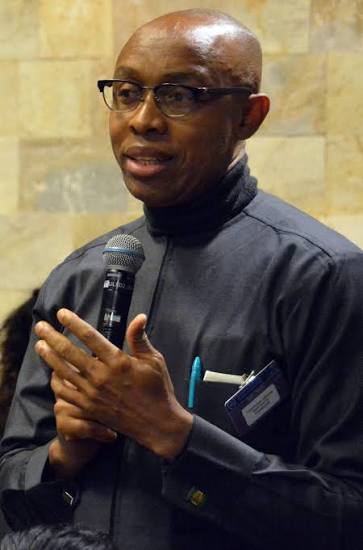
By Bitrus Atta
In communities across the third world, the yearning for development is loud.
Many of our villages still lack motorable roads, potable water, electricity, functional schools and clinics.
For natives who feel this burden, the choice is either to stay back and initiate change or to leave for the cities and beyond.
Sadly, there is a third group. Their stock in trade appears to be standing at the gate of development — stopping every step that concerned individuals take to help the people.
Instead of engineering change, they tackle those trying to help and kick against initiatives that could turn around deplorable conditions.
A recent case in point is the intervention by Prof. Chidi Anselm Odinkalu, former chairman of the National Human Rights Commission (NHRC) and Barr. Gabriel Tsenyen, former Chairman of the Nigerian Bar Association (NBA) Shendam Branch over a development effort in Ngotugu’ut village, Shendam Local Government Area of Plateau State.
First, Prof. Odinkalu is not from Northern Nigeria. He knows little about happenings in Plateau State and even nothing about the far-flung Ngotugu’ut community.
His decision to wade into a local matter under the banner of human rights activism is a disservice to the people of Ngotugu’ut who are seeking progress.
Second, Barr. Tsenyen is a native of Ngotugu’ut and an old lawyer. Yet, his critics ask: what single project can he point to as his contribution to the development of that village?
It is therefore surprising that he would now constitute a wedge against the wheel of progress in his own local community.
The bone of contention, according to sources close to the project, is land.
Barr. Tsenyen claims his father’s land was affected. Rather than wait for the courts to adjudicate, he jumps to make public claims and engage Prof. Odinkalu to amplify them on social media.
The core argument being made by community voices is simple: being a human rights activist or advocate is not a licence for irresponsibility.
It does not preclude one from supporting local communities to pursue development and better living standards.
“People who cannot sacrifice to build their nation should not be allowed space to castigate those who dare to stay back and hold the forte for national development,” a community member said.
He adds, “Some people are so saddened by progress that they cannot see the good in people.”
Critics question Prof. Odinkalu’s record. As former chairman of the NHRC, they allege he left behind “a legacy of disharmony and chaos.”
Yet he continues to pontificate as one without fault — “like a man in a glass house throwing stones.”
This debate reflects a larger tension in rural Nigeria. On one side are indigenes and partners trying to attract projects, schools, clinics and livelihood opportunities.
On the other hand are voices raising legal, environmental and human rights concerns.
The challenge for communities like Ngotugu’ut is to ensure that rights are protected without development being stalled.
Courts exist to adjudicate land and other disputes.
Dialogue exists to clear suspicion. But when disagreements are taken straight to social media and framed as activism, they risk polarizing communities and scaring away investors.
The people of Ngotugu’ut, like many villages in Plateau and across other states deserve both justice and development.
It is better to live for the good of humanity than to indulge in unwholesome ways for personal aggrandizement to the detriment of our people.
As the dust settles, one message is clear from the community: being a human rights activist is a noble calling.
But it must be exercised with facts, with local context and with responsibility.
Atta writes from Lagos


