


By Ben Atonko
Three years after the administration of Governor Hyacinth Alia, residents of the Benue State capital say they are contending with more than bad roads.
They say they are dealing with a new culture on the road — one defined by recklessness, gridlock and impunity.
Since 2023, the state government has awarded contracts for road works almost monthly.
Yet according to public records and residents, only about 11.5km of roads in Makurdi have been completed and commissioned.
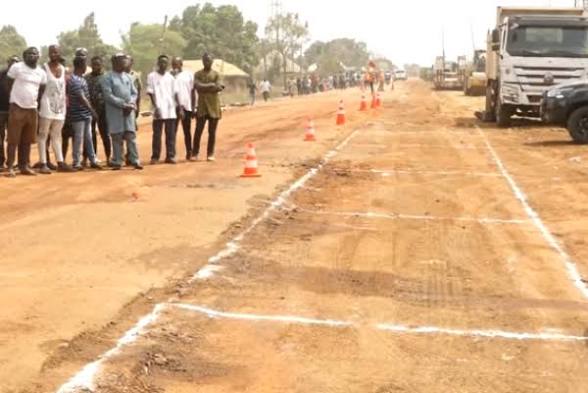
The gap between awards and delivery has left a trail of graded, excavated and abandoned sites across the city.
From Gboko Road through Wurukum to High Level, the story is the same: dug-up stretches, mounds of laterite, blocked access points and traffic forced into single lanes.
Otukpo Road is perpetually dusty. Many arterial roads in the capital are either partially blocked or diverted, pushing all vehicles onto the few passable routes.
The result, commuters say, is predictable.
“Riding in Makurdi has become a nightmare,” said a commercial driver who plies Wurukum–High Level daily.
He added, “People now drive against traffic, cut corners and use walkways just to escape traffic. When there is no road, there is no rule.”
Traffic enforcement is also visibly thin. Traffic police, who once managed peak-hour congestion at major junctions are largely absent from many parts of the city.
With contractors and diversions dictating movement, motorists and motorcyclists say they have adapted to the disorder.
Urban planners warn that this adaptation may outlive the construction. The UN fifth pillar of global action for road safety (user behavior) appears to be eroding in Makurdi.
The overall UN goal for 2021-2030 is to reduce road traffic deaths and injuries by at least 50 percent.
The longer people navigate by instinct rather than lane markings and signals, the harder it becomes to reintroduce discipline when the roads are eventually completed.
“It will be a Herculean task to retrain road users after four years of improvisation,” Mr. Mike Angwe, a transport safety advocate in Makurdi noted. “Behavioral habits are being formed now,” he noted.
The human cost extends beyond traffic. Residents living along corridors where earthmoving equipment operate daily report a rise in respiratory complaints.
The dust clouds reduce visibility and in the last three years there have been multiple reports of crashes involving pedestrians and vehicles.
Gboko and Otukpo, the state’s other major towns face similar complaints of incomplete projects and dust.
Government officials attribute the delays to funding challenges. Contractors are often mobilized but payments lag, leaving projects stalled at grading stage.
The administration argues that spreading work across many roads is a strategy to touch every area and that more time is needed to finish what was started.
But residents disagree. “What stops the government from completing one road, paying contractors as and when due and moving to the next?” asked a civil society leader, Mr Odoh Adikwu. He stated, “Instead, we have 20 roads at 20 percent and 100 percent of the hardship.”
As 2027 approaches, the road narrative has become political. The governor’s camp says the projects are evidence of commitment to development and asks for more time.
Opponents say the approach amounts to political optics at the expense of citizens’ daily welfare.
For now, Makurdi moves in fits and starts. Commuters groan as vehicles take longer routes and pedestrians navigate dust and speeding bikes.
It is apparent that the unfinished roads have entrenched indiscipline as the cycle of contract award, mobilization and abandonment is unbroken.
Those learning to drive amid this chaos are bound to inherit the worst culture of recklessness.
With no traffic enforcement and half-finished roads, this is the generation that will normalize indiscipline behind the wheel.
Enforcement of traffic rules will return to the streets after bad habits become permanent.
This apparently makes nonsense of the global campaign for safer roads.
Atonko is author of Bleeding Roads.


