


By Reuben Angula
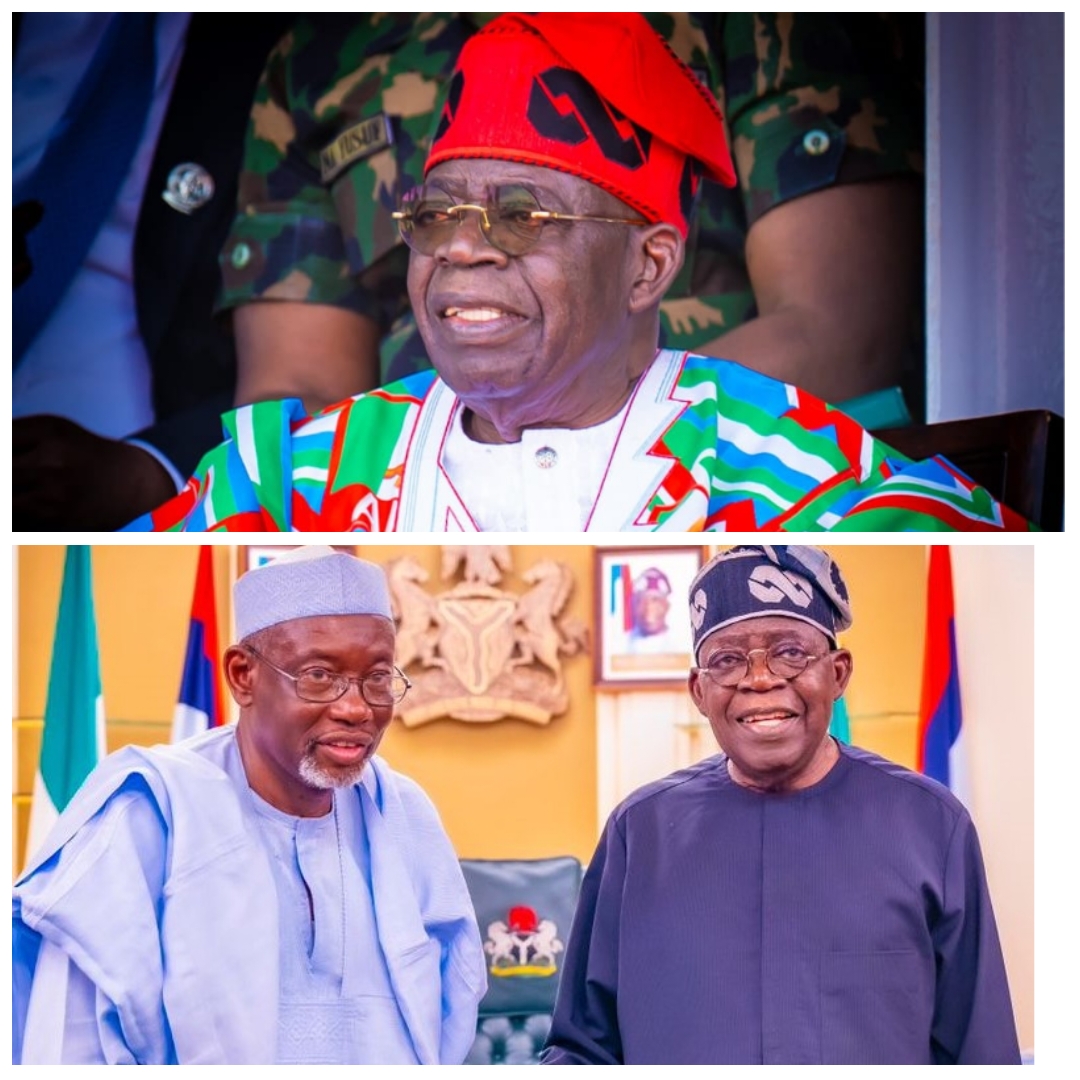
In the arid but fertile expanse of Jigawa State, a profound sense of gratitude and renewed hope now permeates communities from Dutse to Hadejia, and from Kazaure to Gumel. The people of this progressive North-West state warmly welcome President Bola Ahmed Tinubu, the Hero of Democracy and the Father of Modern Nigeria, whose bold reforms have unlocked resources and infrastructure that are transforming lives across the country.
When President Tinubu assumed office in May 2023, Nigeria stood at a fiscal crossroads. Decades of unsustainable fuel subsidies and multiple, distorted foreign exchange windows had drained the treasury, starved subnational governments of resources and rewarded rent seekers at the expense of ordinary citizens.
In two courageous policy decisions, he removed the fuel subsidy and unified the foreign exchange market. These decisions were painful in the short term, yet historically necessary. The result has been a dramatic increase in Federation Account Allocation Committee (FAAC) disbursements to states, including Jigawa. Governor Umar Namadi has repeatedly affirmed that these reforms provided the fiscal space needed to pursue comprehensive development on a scale that was previously impossible.
Federal projects now advancing in and around Jigawa stand as concrete proof of the Renewed Hope Agenda. The Greater Dutse Water Supply Project, valued at approximately ₦59.4–₦59.5 billion, was flagged off in December 2024 after more than two decades of abandonment. Designed to address a chronic daily water deficit, the scheme features 35 industrial boreholes with solar-powered pumps, a 1,000 m³/hr treatment plant, extensive transmission mains and storage tanks. Upon completion within 24 months, it is expected to deliver millions of litres of potable water daily to more than 1.5 million residents of Dutse and its environs, fulfilling a campaign promise President Tinubu made to the late Emir of Dutse.
Equally transformative is the Kaduna–Kano–Jigawa–Katsina–Maradi standard-gauge railway project. By mid-2026, the project had reached approximately 60 per cent completion, with intensive work progressing on the Kano–Dutse branch line, bridges, track laying and earthworks. Fully funded under the Renewed Hope Infrastructure Scheme, the rail corridor will open new arteries of commerce, reduce road congestion and strengthen Nigeria’s economic ties with the Republic of Niger. Complementary federal road projects, including sections of the Kano–Maiduguri corridor and the Kwanar Dangata–Gumel–Hadejia route, are also progressing. Institutions such as the Federal College of Agriculture in Kazaure and the Police Training College in Gwaram continue to receive attention. Agricultural interventions for wheat farmers and access to the Nigerian Education Loan Fund (NELFUND) further demonstrate the federal government’s presence in the state.
At the state level, Governor Umar Namadi’s administration has leveraged the increased revenue with remarkable discipline and ambition. Road infrastructure has been one of the most visible dividends. Inherited projects covering hundreds of kilometres have been completed, while dozens of new contracts for rural feeder roads and township roads, totalling well over 900–1,000 kilometres, have been awarded, with cumulative investments running into hundreds of billions of naira. Recent approvals alone include multi-billion-naira packages for township roads in Kafin Hausa, Gwaram, Ringim, Garki and Dutse Phase II.
In the health sector, specialist hospitals in Kazaure and Hadejia are advancing, an orthopaedic facility is being developed in Gumel, and primary healthcare centres across political wards are being upgraded or rehabilitated. Free healthcare services for vulnerable groups, children under five and pregnant women have also been expanded. Thousands of health workers have been recruited.
The education sector has witnessed massive teacher recruitment, including thousands of permanent and J-Teach staff, alongside classroom and Tsangaya school renovations, bursaries, Technical and Vocational Education and Training programmes, and solar-powered ICT centres. A proposed $110 million partnership with the Islamic Development Bank is also expected to support school infrastructure and teacher development.
Agriculture, the backbone of Jigawa’s economy, is undergoing significant modernisation, with hundreds of tractors and combine harvesters deployed, fertiliser subsidies aligned with federal allocations, greenhouses established for youth agribusiness, and investments in irrigation schemes and agro-processing zones. Major private-sector investments, such as the Dangote Rice Mill, further strengthen the state’s agricultural potential. Renewable energy projects, including multi-billion-naira solar mini-grids for government institutions and water facilities, alongside skills acquisition centres and flood control works, complete a comprehensive development portfolio. State Executive Council approvals of ₦91 billion, alongside other multi-billion-naira packages across these sectors, underscore the scale of development activity made possible by the increased fiscal capacity.
These achievements are not abstract. They are roads that carry farm produce to markets, water that ends decades of scarcity, classrooms that keep children in school, hospitals that save lives and solar power that reduces operating costs. They are tangible outcomes of a President who dared to end a subsidy regime that never truly benefited the common man and correct exchange rate distortions that discouraged genuine investors. Governor Namadi has been unequivocal in his position: the reforms rescued Nigeria from a deeper crisis and equipped Jigawa with the resources to deliver more effectively for its people.
As January 2027 approaches, the people of Jigawa have taken stock. They have seen the water project flagged off, the railway advancing, roads extending across communities, hospitals and schools improving, and the agricultural base strengthening. They recognise that the short-term adjustments introduced in 2023 have given way to sustained capital investment and greater fiscal capacity.
In gratitude for the leadership of the Hero of Democracy and the Father of Modern Nigeria, the people of Jigawa are ready to reciprocate by standing firmly behind President Bola Ahmed Tinubu and all All Progressives Congress candidates in January 2027, ensuring that the momentum of the Renewed Hope Agenda continues to build a greater Jigawa and a more prosperous Nigeria.
Angula is a member of the Tinubu/Shettima campaign council


