


By Peters Ichull
To understand Gboko is to understand that no culture is a pure, untouched stream. True culture is an aggressive mixed grill, a predatory organism that survives by shopping for external brilliance and absorbing it into its own bloodstream.
Like bees poaching pollen from foreign flowers to manufacture local honeycombs, and then fighting fiercely to defend the hive, societies kidnap, borrow, and plagiarize the attractive habits of their neighbors simply to survive the next day.
In the deeply misunderstood depths of Tiv cosmology, this precise sociological truth is encoded in the very word Akombo. While casual observers reduce akombo to mere spiritual mysticism, its foundational, ancestral definition translates to “gatherings of foreign cultures.”
The ancestral pathfinders of the Tiv nation understood that insularity meant death. To thrive, they actively paid heavy tokens, and hefty prices, to acquire specialized healing skills, sacred technologies, and organizational habits from foreign contacts. From “akombo a Udam” to the “Imbyorvungu,” these foundational elements were birthed through external friction. Once these stolen fragments were rationalized, localized, and mastered, they became what the world now classifies as “indigenous knowledge.”
Gboko did not become the boiling pot of Tiv civilization by isolating itself; it became great by executing a massive, sophisticated cultural raid on the rest of the world.
Nowhere is this “plagiarized symphony” more spectacular than in the musical architecture of the town. The legendary, hypnotic sway of the Swange dance, widely exported as the definitive identity of the Tiv people is not a primitive, ancient relic. It is a highly sophisticated, modern mixed grill. Its steps were intentionally spliced together by Gboko youths who poached and incorporated the physical language of Congolese Rumba, Lingala highlife, Jamaican Reggae, and American Country music.This early hunger for global orchestration was actively financed by the town’s elite.
Seeing the immense psychological leverage of music, the visionary Paul Unongo returned to Gboko determined to build a world-class indigenous band. He identified a brilliant young student at William Bristow Secondary School, James Numbe, and immediately sent him into an apprenticeship under the legendary Nigerian musical maestro, Sir Victor Uwaifo.
Upon Numbe’s return, Unongo spared no expense, purchasing a complete, state-of-the-art set of musical equipment. Adopting the electrifying, global moniker “Jim Pax X Cum Numbe,” the young virtuoso commanded the lead guitar and piano. He was flanked by a lethal rhythm section: Billy Jagger on the drums, Steve Gondo slapping the bass guitar, and Joe Marvey anchoring the kongas.
For a magnificent, unyielding era, Gboko went completely wild under the spell of Jim Pax’s music. The town became a dense hive of professional musical excellence, breeding legendary guitarists and singers like Mad Man Jagger, the soulful saxophone melodies of Donna Goodman, and the early creative stirrings of figures like Mike Dzuamo and Joe Ichull, the Anyam brothers, Dominic Dzever.
They took the sonic frequencies of the world and forced them to speak the language of Gboko.
While the musicians captured the night, a highly influential class of student holiday-makers was re-engineering the social aspirations of the daytime streets. Call it “The street academy.” Returning home on vacation from various elite regional boarding schools, these students functioned as localized vectors of global sophistication, vicariously impacting the home population through public debates and sharp street conversations.
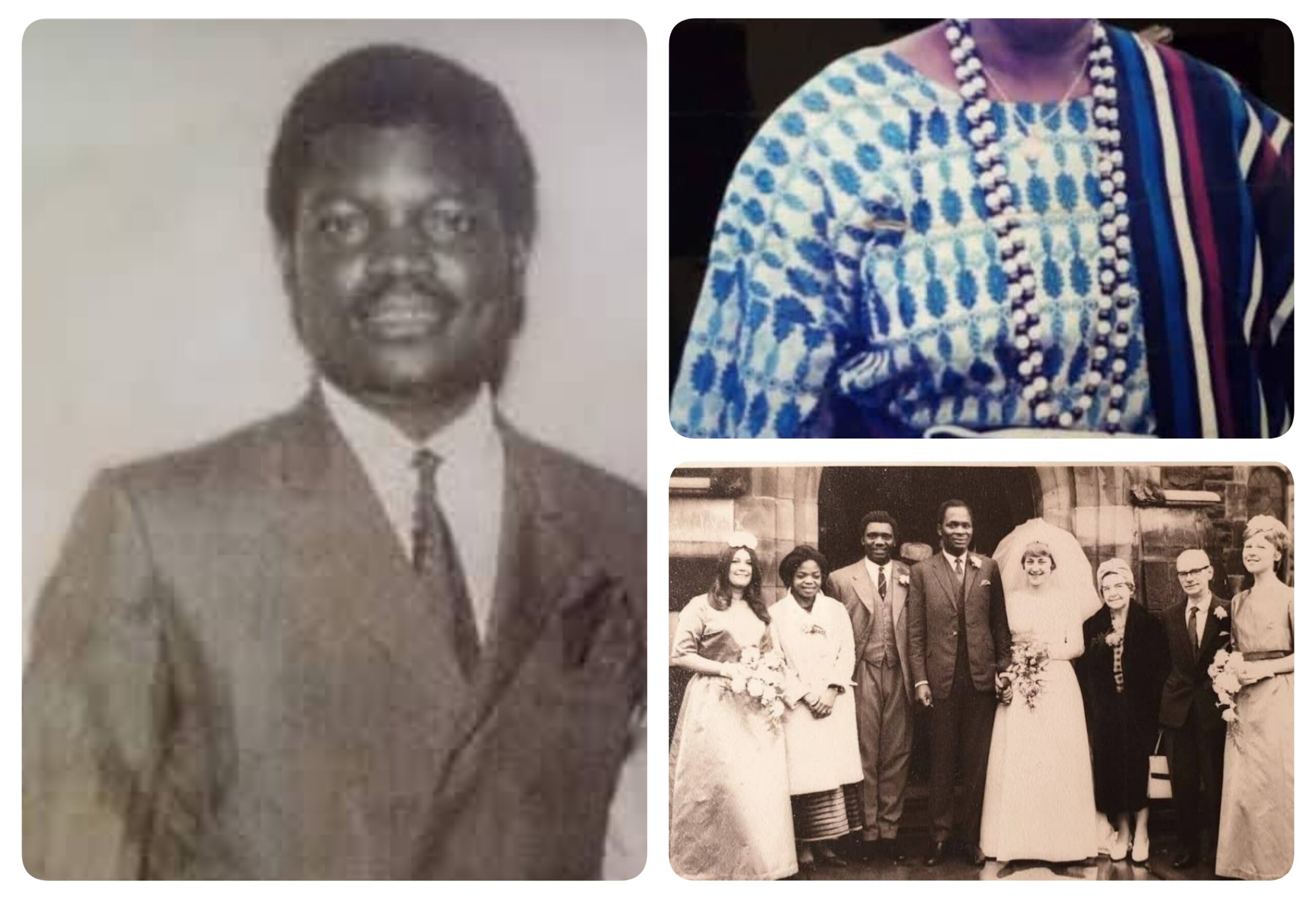
A particularly iconic memory, preserved through Eugene Ivase, paints the definitive picture of this generational shift. In the heart of the town, at the exact geographic site where the NKST Central Church stands today, three elite students would routinely converge: Elizabeth Afazwana Ivase, the first female federal cabinet minister in northern Nigeria; James Adzenda Ichull, the first career diplomat in Tivland and Joe Akaahan, the first Tiv Chief of army staff.
The crossroads sat precisely halfway between their respective family homes. There, beneath the open sky, the trio would stand for hours, locked in fierce, intellectual arguments and erupting into sophisticated laughter—communicating entirely in flawless, rapid-fire English.
For the younger, barefoot generation of Gboko youths standing on the periphery, this crossroads was not just a street corner; it was a living theater of the future. They would gape in absolute, silent admiration at the linguistic gymnastics of Elizabeth, James, and Joe. These roadside interactions had a devastatingly beautiful effect on the subconscious of the town. It proved to the youth that to be a true child of Gboko, one had to master the master’s language, weaponize articulation, and stride through the world with an unyielding intellectual confidence.


